Buikwe District Uganda Vanilla Project
From asylum to ownership: Buji Vanilla began in a California garage and now brings premium Ugandan vanilla to the world, sourced from Ignitius’s home community and built to share value back with farmers. Spun out from Wovoka into a US LLC for retail scale, with Ugandan ownership at the core.

Buikwe District, Uganda

Rural Agency for Sustainable Development

Agroforestry supply chain

Project start: 2024
4
Retail Products
3
Markets Reached
20%
Ugandan Ownership
2024
Project Start
Connecting Ugandan vanilla farmers to global markets
After being violently persecuted by the Museveni regime in Uganda, Ignitius Bwoogi came to the United States seeking asylum. Wovoka worked with a local community group in California to gather community support that helped him secure legal status, get a work permit, find employment, find housing, get a car, and begin building an agroforestry venture connected to his work in Uganda.
From 2024 to 2025, Ignitius stayed with Lee, Wovoka’s CEO, and the two began making vanilla products in Lee’s garage. That early experimentation grew into Buji Vanilla LLC, a Wovoka spin-out commercializing premium Ugandan vanilla products sourced from Ignitius’s home community.
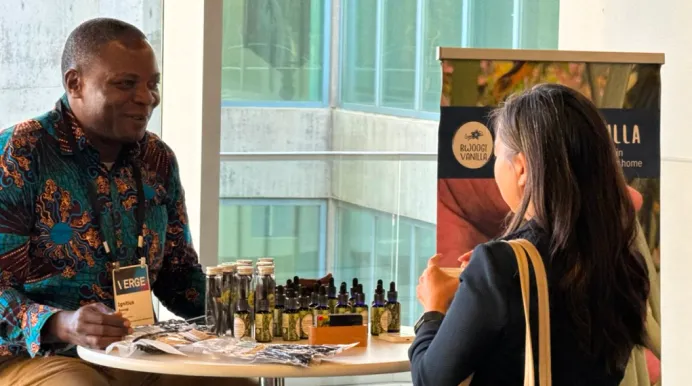
Today, Ignitius is a 20% owner of Buji Vanilla. The company has expanded production to a licensed food facility in Los Angeles, hired CEO Armand Dowlati, and now retails four vanilla products across the United States, Canada, and Singapore.
Ways To Participate

Buji Vanilla
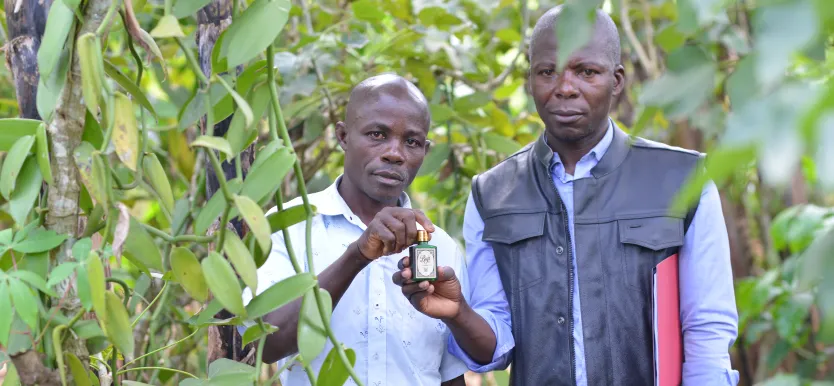
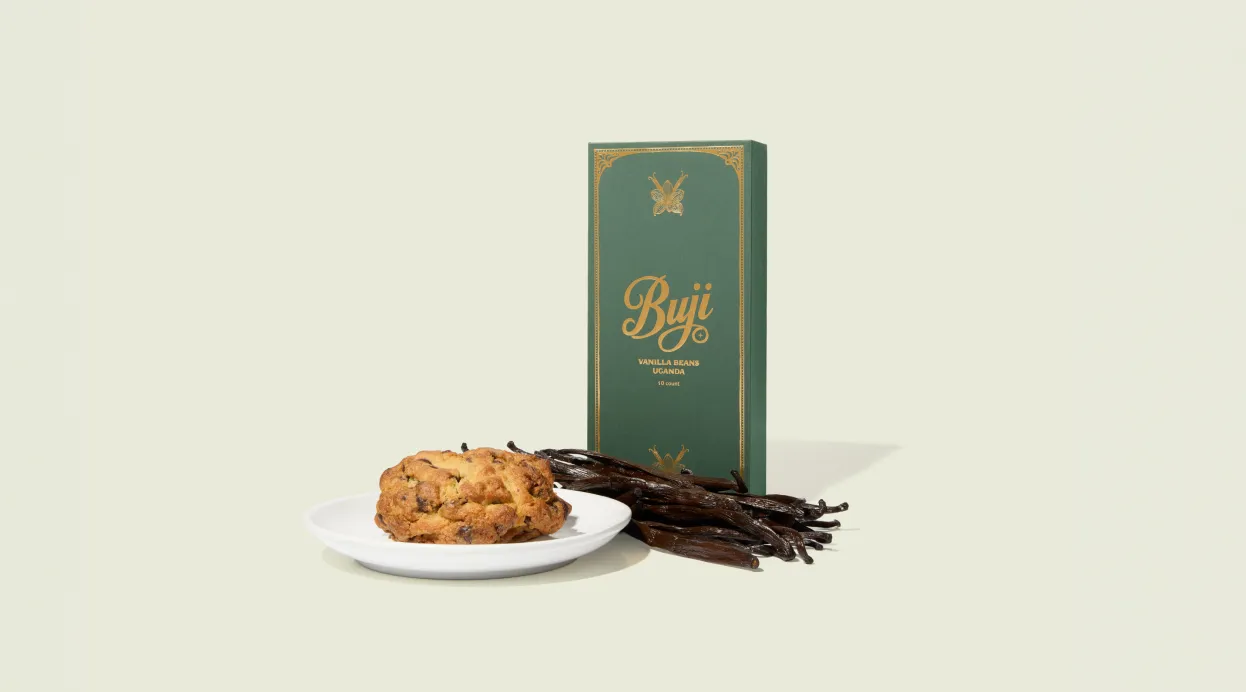
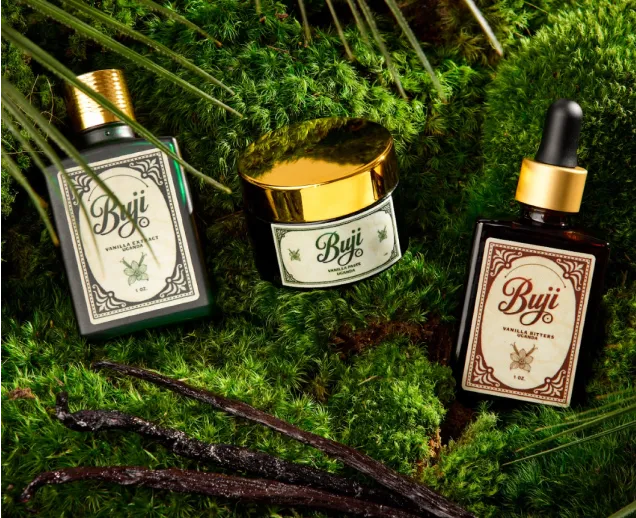
Whole beans, extract, paste and cocktail bitters from 21 mapped farms in Buikwe. Buji Vanilla sells on its own site.
Questions about this project, or interested in partnering with us?
Ecological Impact
Building A Vanilla Supply Chain Rooted In Livelihood And Forest Protection
Agroforestry Supply Chain
The project supports an agroforestry-linked vanilla supply chain sourced from farmer communities in Buikwe District, Uganda.
Vanilla can create income from land stewardship rather than extraction, helping rural producers connect to higher-value markets. Through Buji Vanilla, community-grown vanilla is being transformed into premium retail products for international customers.
This is not a carbon credit project. It is a supply chain project designed to connect agroforestry, livelihoods, product development, and long-term market access.
Farmer Livelihoods
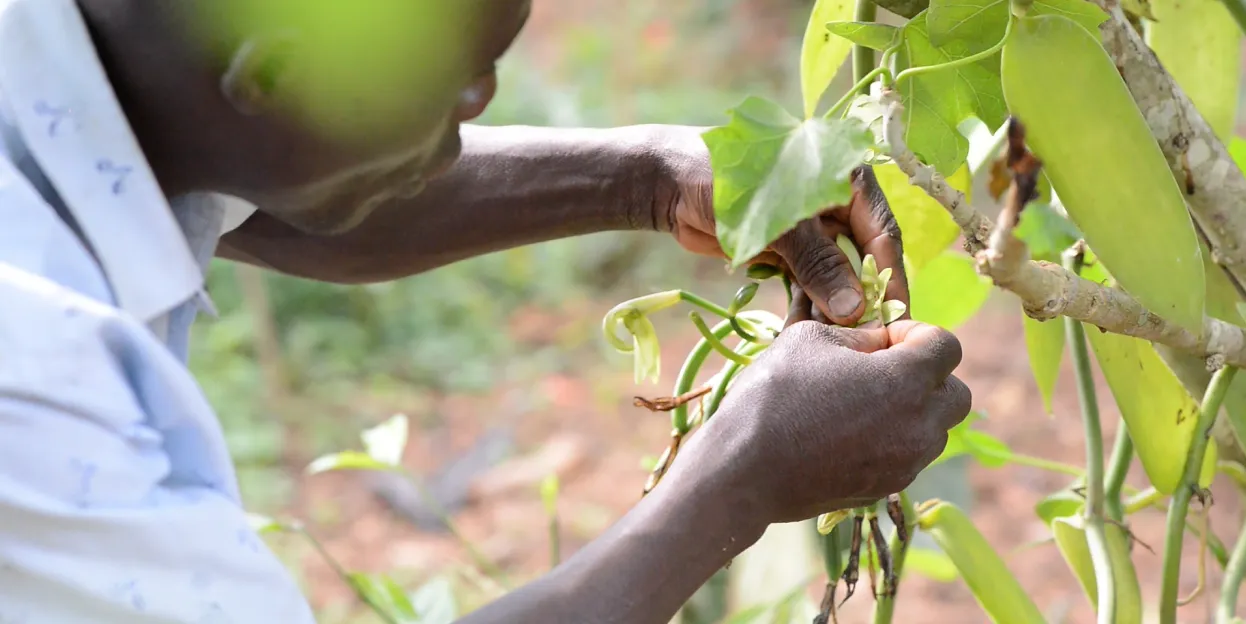
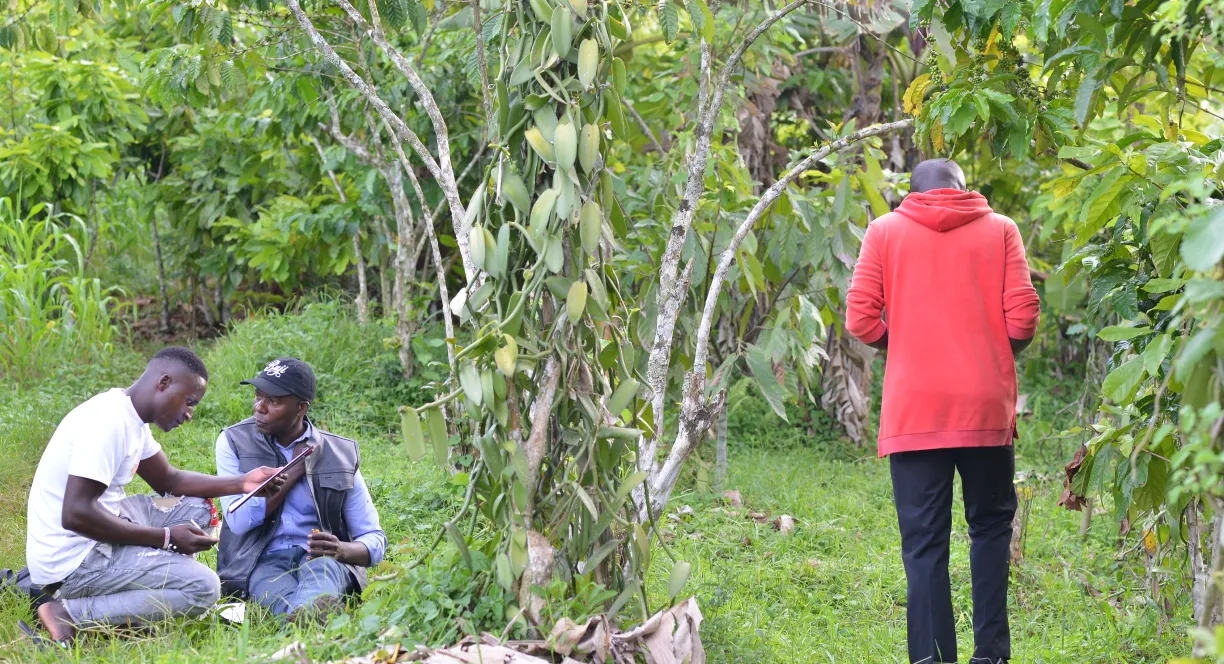
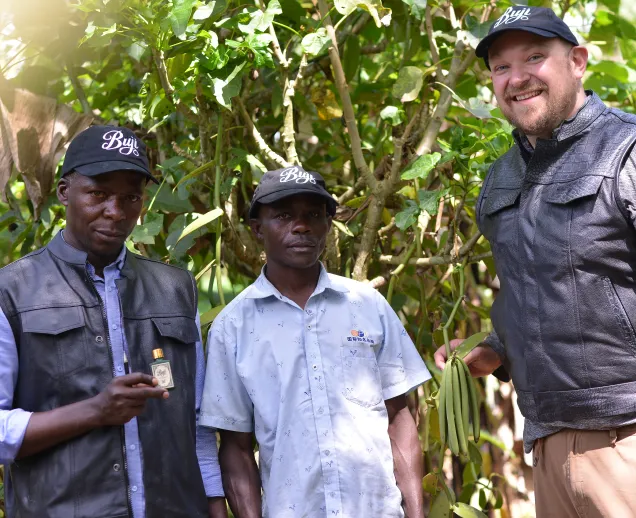
Vanilla farmers in Buikwe District often work on small farms between 1 and 7 acres, growing vanilla alongside cacao, matoke, coffee, jackfruit, sweet potato, yam, soursop, banana varieties, vegetables, and other crops.
The challenge is not that farmers lack skill. It is that vanilla takes careful planting, harvesting, curing, transport, and market access. Farmers described the process as “painful,” especially when rigorous work results in low prices through traders or processors.
Buji Vanilla creates a pathway to change that relationship by turning community-grown vanilla into branded retail products with stronger storytelling, clearer sourcing, and more value connected to the growers behind the product.
Product Commercialization
What started in a garage has grown into a retail-ready vanilla company.
Buji Vanilla has moved production into a licensed food facility in Los Angeles and now sells four vanilla products across the United States, Canada, and Singapore. The brand gives the project a practical route to impact: better products, stronger demand, and more value moving through a farmer-linked supply chain.
The finished product is not separate from the project. It is the mechanism that helps the project grow.
How it was proven
RASD proved the model first, with gifts passed straight through
The growers behind Buji Vanilla were organised long before the brand. The Rural Agency for Sustainable Development (RASD) is the community NGO Ignitius Bwoogi founded in Nkokonjeru, registered in Uganda in December 2005 and run by people who grew up there.
Lee, Wovoka’s CEO, has worked with RASD since 2006: as a Duke engineering student helping build its resource centre, then placing Engineers Without Borders volunteers on its coffee work, and in January 2014 running a farmer and trader day there on coffee pests and prices with UC Davis. In 2025 RASD showed what it could do when donated money reached it directly.
2024
A US channel for gifts
RASD was vetted by CAF America, a US 501(c)(3) charity, and opened a Friends Fund there. Friends in the US could give to RASD and deduct the gift, and CAF America passes the money to RASD’s own account in Uganda.
May 2025
Farmer Celebration Day
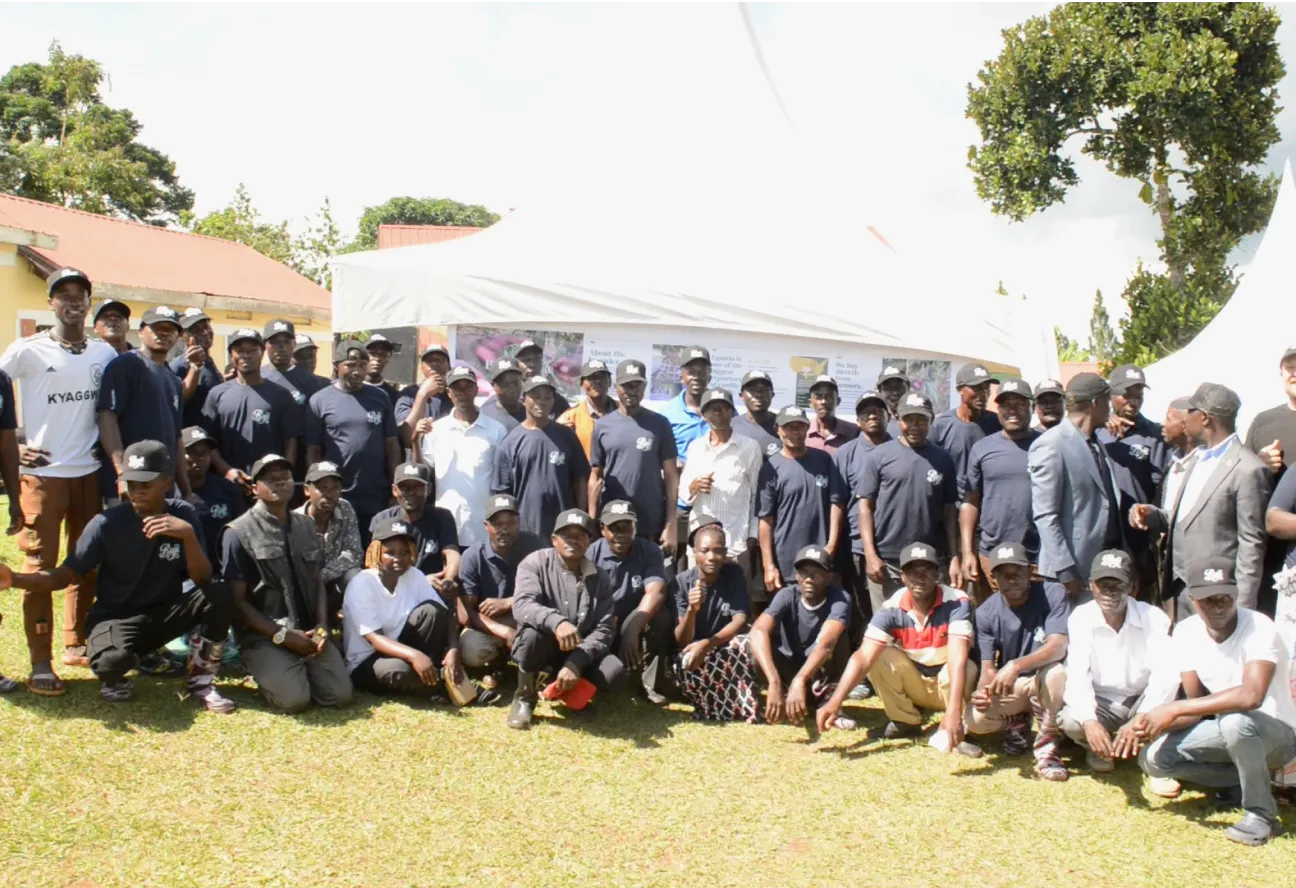
With those gifts in its account, RASD’s team signed up 40 vanilla growers, visited their farms and held a Farmer Celebration Day at the resource centre in Nkokonjeru. A bicycle race, the Tour de Nkokonjeru, opened the day, and the best-kept vanilla gardens won a motorcycle, bicycles and wheelbarrows. The gifts paid for all of it, prizes included.
Since then
Proof on the land
The farm visits mapped 21 farms near Lake Victoria where vanilla grows under cocoa, coffee, matoke and jackfruit. RASD, not Wovoka, decided how the money was spent. Those farms now grow the vanilla Buji Vanilla brings to market.
US donor→US 501(c)(3) sponsor→Local operator’s own account→Work on the land
Blended finance: each kind of money does its own job
Gifts pay for the groundwork no buyer would fund alone and that stays with the growers: training, farm visits, mapping, farmer days and prizes. The business side pays its own way: Buji Vanilla buys and sells the vanilla with its own money, and none of the gifts go to Wovoka or Buji Vanilla. The charity decides how gifts are spent, the company carries its own commercial costs, and neither subsidises the other. That is how donated money unlocks a working supply chain instead of propping up a business.
The same model, now through Inclusive Forests
Inclusive Forests ↗ is the nonprofit Wovoka works with to repeat what worked in Nkokonjeru for forest communities in the Philippines. It backs local operators who have already proven themselves, and gifts go straight to them through a US fiscal sponsor, which keeps a small sponsor fee.
The money builds what those operators need to protect their land and raise what it yields. Wovoka’s part is the business side: building the products and markets, as Buji Vanilla does for Buikwe’s vanilla.
Wovoka is a company and does not take donations. Gifts go to Inclusive Forests, which is opening its US giving channel now.
- Proven operatorsCommunity organisations with a record on their own land, as RASD has in Nkokonjeru.
- Money goes directFrom a US 501(c)(3) sponsor, which keeps a small fee, to the operator’s own account. Wovoka takes nothing from the gifts.
- Capacity the operator runsTraining, farmer days and prizes, nurseries, mapping and monitoring, chosen and run by the people on the land.
Project Journey
The Buikwe District Uganda Vanilla Project grew step by step, from personal support and early product experiments into a commercial vanilla company connected to farmer communities in Uganda.
2024-2025
•
Support Ignitius & Start Buji Vanilla
Wovoka and a California community group helped Ignitius secure legal status, work authorization, housing, transport, and employment. During this same period, Ignitius stayed with Lee in Scotts Valley, where they began experimenting with vanilla products and building the first version of Buji Vanilla.
2024
•
RASD Opens A US Giving Channel
RASD was vetted by CAF America, a US 501(c)(3) charity, and opened a Friends Fund there, so US supporters can give to its work in Nkokonjeru and deduct the gift.
May 2025
•
Farmer Celebration Day
Gifts passed through CAF America to RASD funded farm visits and a Farmer Celebration Day in Nkokonjeru: 40 growers signed up, 21 farms were mapped and the best-kept vanilla gardens won prizes.
2025–2026
•
Build The Company
Buji Vanilla expanded into a licensed food facility in Los Angeles, hired CEO Armand Dowlati, and developed retail-ready products.
2026 Onward
•
Grow The Market
The company now sells four vanilla products across three international markets, with a pathway to increase farmer-linked value over time.
Next
•
Repeat The Model With Inclusive Forests
Inclusive Forests takes the same approach to forest communities in the Philippines: gifts go straight to proven local operators to build their capacity, with only a small sponsor fee taken along the way.
Built with the people and organizations behind the vanilla
The Buikwe District Uganda Vanilla Project connects founder ownership, farmer participation, local development work, and international retail.
At the center is Ignitius Bwoogi, whose story links the United States and Uganda through resilience, enterprise, and community sourcing. The project also works alongside Rural Agency for Sustainable Development, farmer communities in Buikwe District, Buji Vanilla LLC, and the support network that helped turn the first garage-made products into a commercial brand.
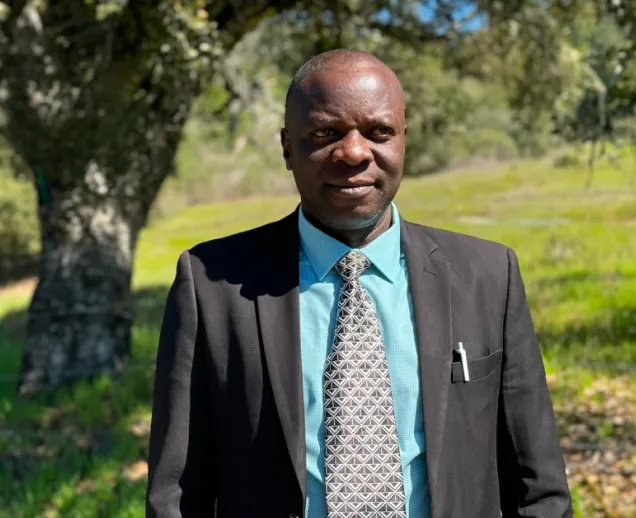
Ignitius Bwoogi
Founder and 20% owner
RASD
5 program areas
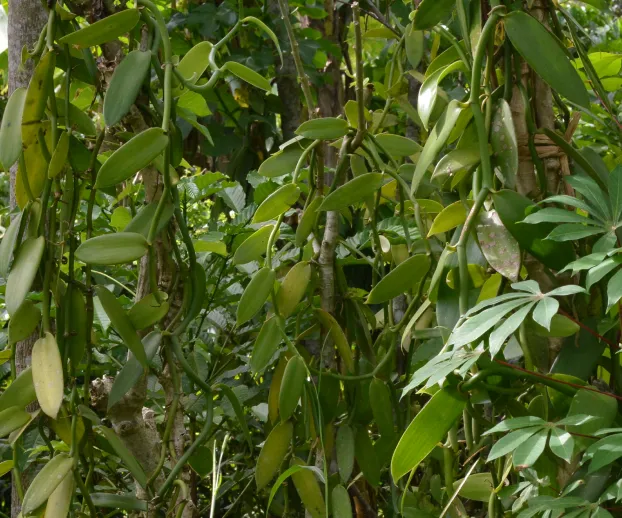
Vanilla Farmers
1 to 7 acre farms
Buji Vanilla LLC
4 retail products
Vanilla that shares value
The Buikwe District Uganda Vanilla Project shows a different side of nature-based development: not carbon credits, but market-building.
By helping launch Buji Vanilla, Wovoka helped turn community support, asylum support, product experimentation, farmer engagement, and community-linked sourcing into a commercial supply chain. The project has secured $50,000 of its launch budget, moved into implementation, and created a retail pathway for Ugandan vanilla products across three international markets.
The impact is practical and human. Farmers gain a stronger route to income. Ignitius gains ownership in a company connected to his home community. Customers gain access to premium vanilla with a story of resilience, livelihood, and shared value behind it.
Try the vanilla. Support the farmers behind it.
Every purchase helps strengthen a supply chain built around ownership, livelihood, and value flowing back to the people who grow the product.